Introduction
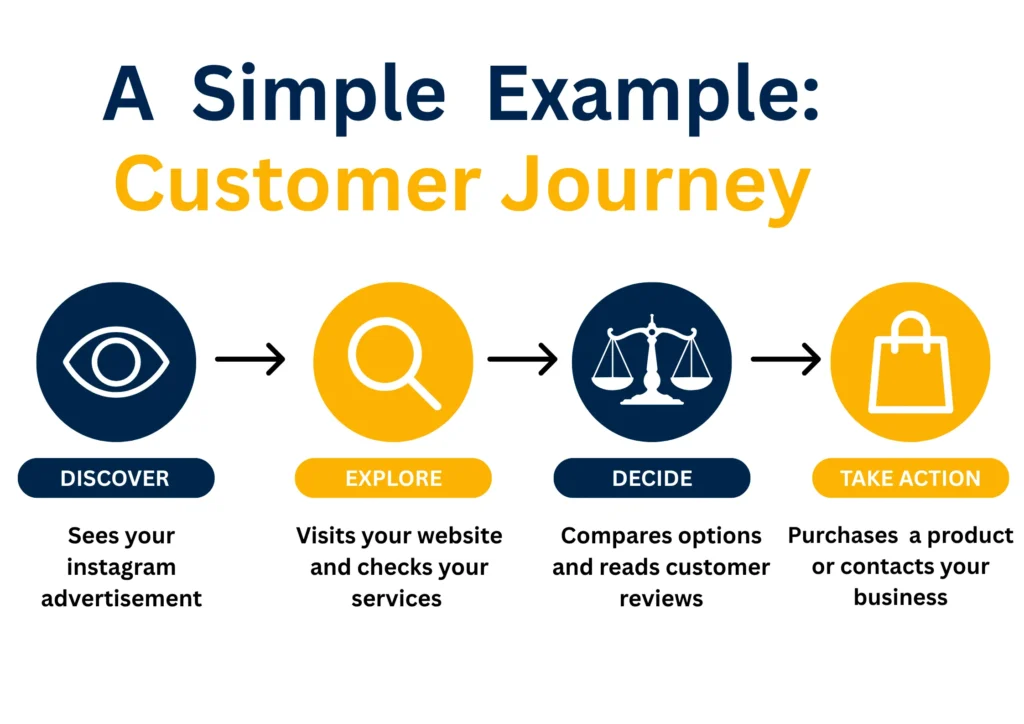
Have you ever seen an advertisement for a product on Instagram, visited the company’s website, checked its reviews, and finally decided to purchase it in a few days later?
This is a common customer journey. Businesses use different digital marketing activities to guide people through this process.
Not everyone who discovers a business becomes a customer immediately. Some people may be interested in a product but need more information before making a decision. Others may compare different brands before choosing one.
This is where a digital marketing funnel becomes important. It helps businesses understand how potential customers move from discovering a brand to taking an action, such as making a purchase or contacting the business.
Let’s understand how it works.
What Is a Digital Marketing Funnel?
A digital marketing funnel is a model that explains the different stages a person goes through before becoming a customer.
It is called a funnel because many people may discover a business at the beginning, but only some of them eventually become customers.
For example, imagine a person who wants to purchase a new smartphone.
First, they see a smartphone advertisement on Instagram. Later, they search for its features on Google, compare it with other models, and read customer reviews. After considering the available options, they decide to purchase it.
Each of these actions represents a different stage of the marketing funnel.
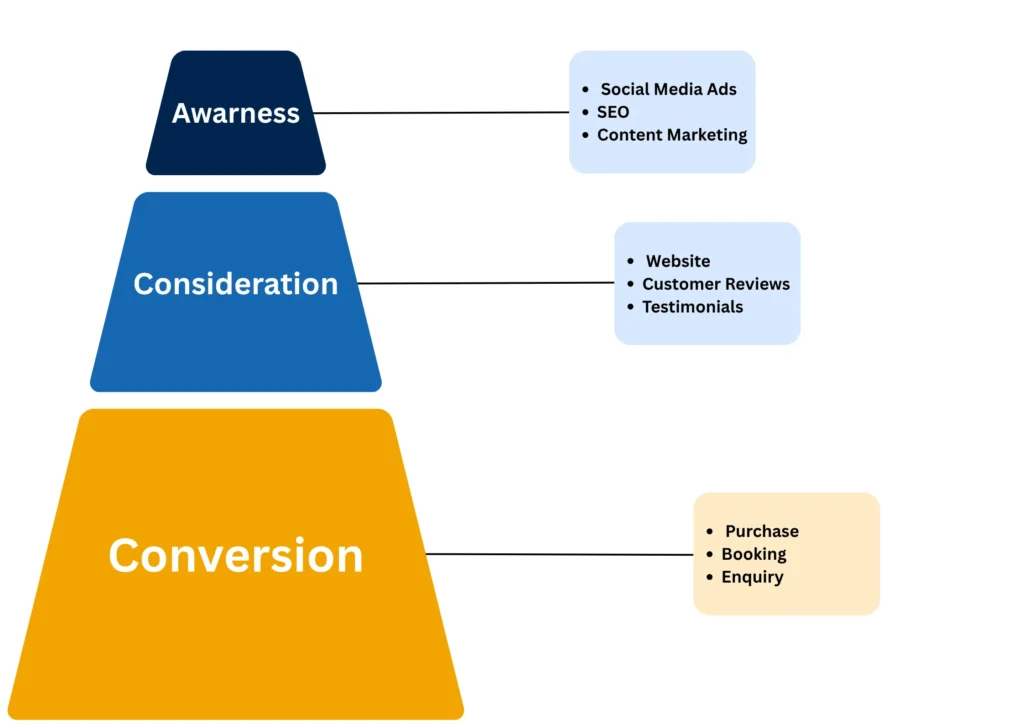
The 3 Main Stages of a Digital Marketing Funnel
A basic digital marketing funnel consists of three main stages: Awareness, Consideration and Conversion.
1. Awareness – Making People Discover Your Business
Awareness is the first stage of the funnel.
At this stage, people may not know about your business, products, or services. The main goal is to introduce your brand and make potential customers aware of what you offer.
Businesses can use different digital marketing channels to reach people, such as:
- Instagram and Facebook advertisements.
- Google search results.
- Social media posts and reels.
- Blog articles and helpful content.
- YouTube videos.
For example, imagine a newly opened cafe in Thrissur. The owner runs Instagram advertisements showing the cafe’s food, atmosphere, and location.
People who see these advertisements may become interested in visiting the cafe, even if they have never heard about it before.
That is how the awareness stage works.
2. Consideration – Building Interest and Trust
Once people discover a business, some of them may want to learn more before making a decision.
This is the consideration stage.
At this point, potential customers start exploring the available options. They may visit websites, compare prices, read reviews, and check whether a product or service meets their requirements.
Businesses can support this stage through:
- Informative website content.
- Customer testimonials and reviews.
- Product demonstrations.
- Email marketing.
- Retargeting advertisements.
Let’s continue with the cafe example.
Someone sees the cafe’s Instagram advertisement and becomes interested. Before visiting, they search for the cafe on Google, check its menu, look at customer reviews, and explore its photographs.
Providing clear and useful information can help the business build trust with that potential customer.
3. Conversion – Turning Interest into Action
Conversion is the stage where a potential customer takes the desired action.
This could be purchasing a product, booking an appointment, submitting a contact form, or making an enquiry.
For example, after checking the cafe’s menu and reviews, the person decides to visit and places an order.
That action is a conversion.
Businesses can encourage conversions by:
- Providing clear calls to action.
- Making websites easy to navigate.
- Offering simple enquiry or booking options.
- Creating relevant offers.
- Making the purchasing process convenient.
The main objective is to make it easier for interested people to take the next step.
.
How Do Digital Marketing Channels Work Together in a Funnel?
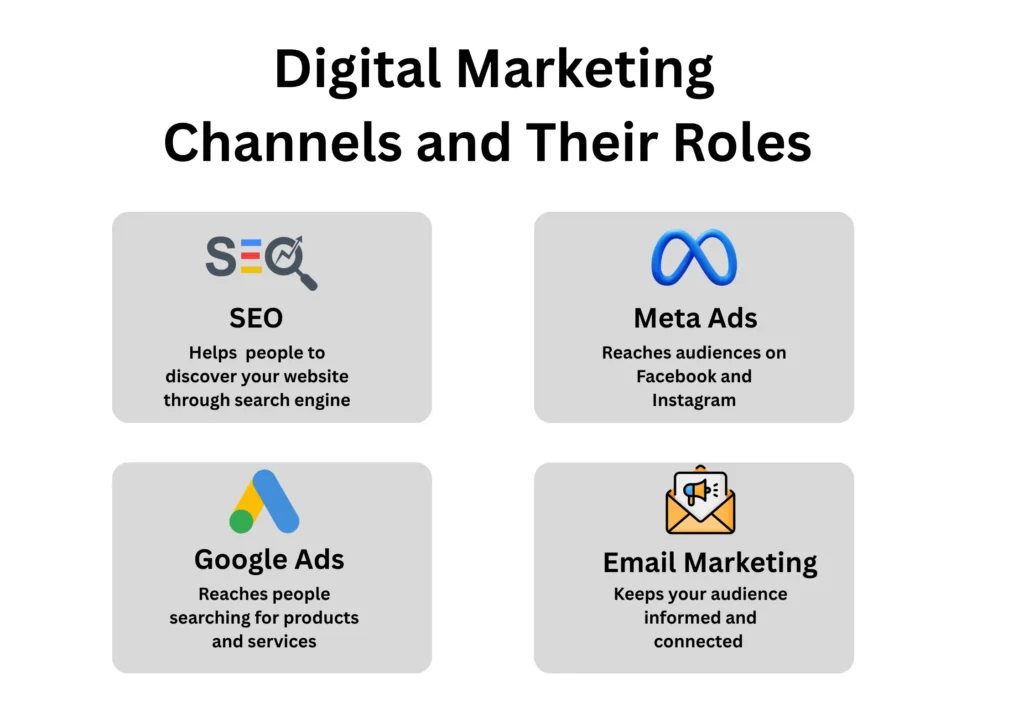
Different digital marketing channels can support different stages of the customer journey.
For example:
| Marketing channel | How it helps |
| Meta Ads | Introduces products and services to new audiences. |
| Google Ads | Reaches people searching for specific products or services. |
| SEO | Helps people discover a business through organic search results. |
| Content Marketing | Provides useful information and builds interest. |
| Email Marketing | Helps businesses communicate with interested customers. |
These channels do not always work in separate stages. A business can use multiple channels together depending on its audience and marketing goals.
For example, someone might discover a business through Instagram, visit its website through Google, and later convert after seeing a retargeting advertisement.
Why Is a Digital Marketing Funnel Important for Small Businesses?
A marketing funnel helps small businesses understand that not every person who sees an advertisement is ready to purchase immediately.
Without understanding the customer journey, a business might focus only on getting more views or website visitors.
However, attracting attention is only the beginning. Businesses also need to provide useful information, build trust, and make it easy for customers to take action.
A digital marketing funnel helps businesses:
- Understand customer behaviour.
- Identify where potential customers lose interest.
- Choose suitable marketing channels.
- Improve advertising and website strategies.
- Focus on generating meaningful enquiries and conversions.
For a small business with a limited marketing budget, understanding these stages can help make marketing activities more focused.
How Can Businesses Improve Their Marketing Funnel?
Businesses should regularly review how people interact with their advertisements, websites, and other marketing channels.
For example, if an advertisement receives many clicks but very few enquiries, the business may need to improve its landing page or make its offer clearer.
Similarly, if people visit a website but leave without taking action, the business can review the website content, navigation and contact options.
Tools such as Google Analytics 4 and advertising platform reports can help businesses understand user activity and campaign performance.
The important thing is not just to attract more visitors but to understand what happens after they discover your business.
Final Thoughts
A digital marketing funnel helps businesses understand the journey people take before becoming customers.
From discovering a brand to exploring its products and finally taking action, each stage plays an important role in marketing.
For small businesses, understanding this process can make it easier to plan advertisements, create useful content, and improve the customer experience.
Digital marketing is not just about reaching more people. It is also about guiding the right people towards the right action at the right time.